A low-angle, vertical photograph taken from a dirt path within a dense grove of tall, mature oil palm trees. The long, green fronds of the trees arch overhead, partially obscuring a bright blue sky with a few white clouds.

Sustainable Palm (Kernel) Oil

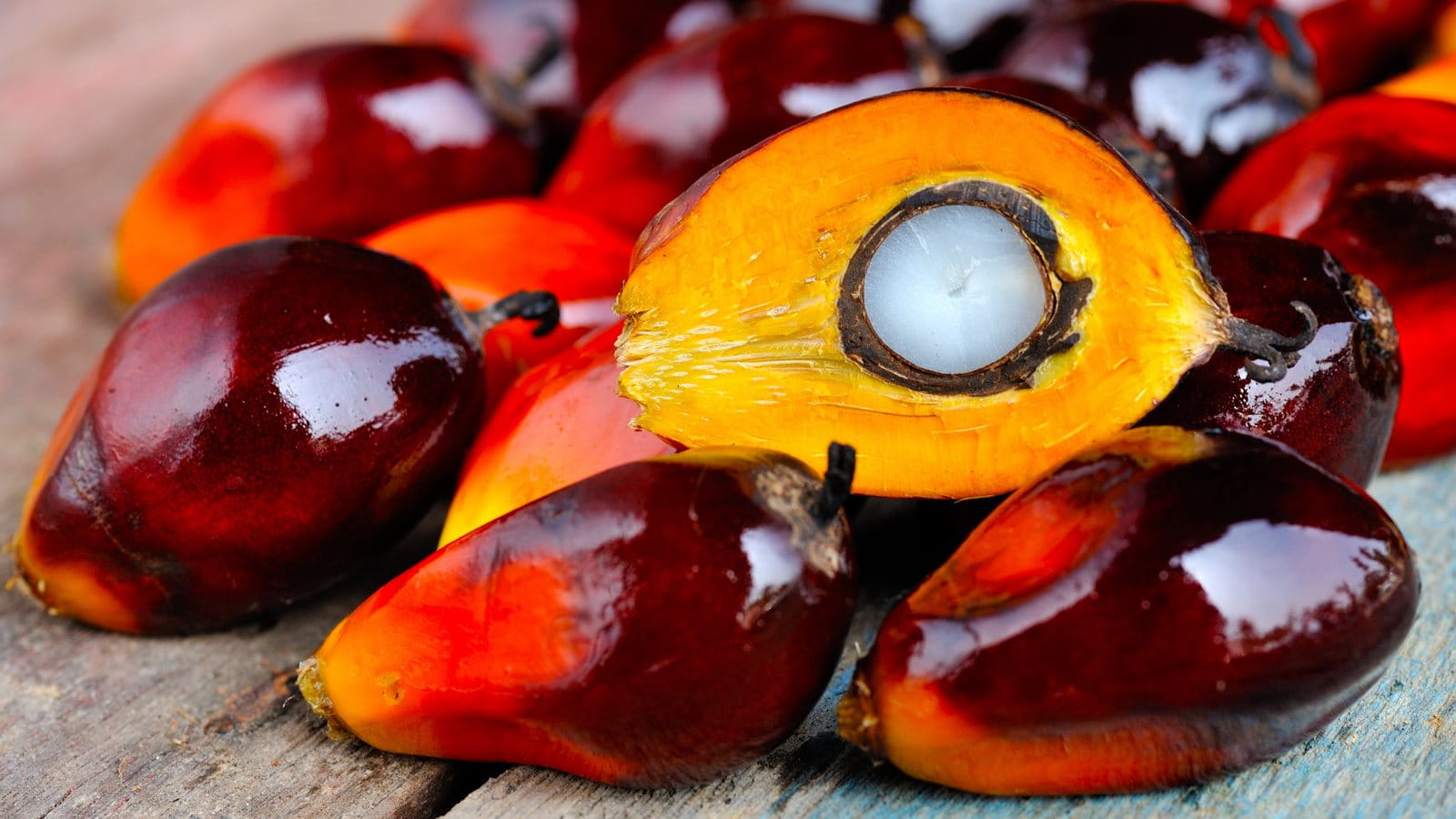
A close-up photograph of a cluster of ripe oil palm fruits. The fruits are oval-shaped with a smooth, dark reddish-brown outer skin, and one fruit is sliced open to reveal its bright orange fleshy interior and a single white seed.

Many ingredients that are essential for the production of cosmetic products – such as emulsifiers and surfactants – are extracted from mineral or vegetable oils, e.g. palm (kernel) oil. As a global skin care company we do not purchase palm (kernel) oil directly but use derivatives (further processed substances based on palm (kernel) oil). When sustainably cultivated, oil palms are ecologically very efficient plants that allow maximum oil production on a comparatively small area of cultivated land. To conserve scarce resources and minimize the environmental impact of our products, we work closely with our partners along the supply chain.
A logo for the Round Table on Sustainable Palm Oil (RSPO) featuring a stylized green palm tree silhouette in the center. The graphic is surrounded by the circular text "CERTIFIED SUSTAINABLE PALM OIL" in black, with the bold orange letters "RSPO" at the bottom and a certification number "RSPO 4-0125-10-100-00" printed below.

At Beiersdorf we actively support a sustainable palm (kernel) oil economy that does not lead to the deforestation of rainforests, i.e. primary or secondary forests. Our annual requirement is around 40,000 tonnes, equivalent to 0.05% of the annual global production of palm (kernel) oil (source: United States Department of Agriculture 2024). Since the end of 2020 we only use palm (kernel) oil and derivatives from sustainably certified sources in all our products worldwide. 

Palm Sustainability Roadmap

Guided by our Palm Sustainability Roadmap, we steer our activities towards sustainable raw material procurement, maximum transparency along our entire supply chain, and improving the working and living conditions of smallholder farmers. To achieve these goals, we pursue several strategic approaches.

Sustainability Certifications

In recent years we made significant progress in switching to sustainbly sourced palm-based materials. As early as 2011 we began to base our palm (kernel) oil procurement practices on the RSPO Supply Chain Certification Standard (SCCS) established by the Roundtable on Sustainable Palm Oil (RSPO).

A medium shot of a dirt road winding through a dense plantation of tall, mature oil palm trees. A small, dark-colored pickup truck is driving along the uneven path, with two workers standing nearby in the lush green vegetation.

We achieved our target of using 100% sustainably certified palm (kernel) oil and its derivatives by the end of 2020. This means that in our products we only use palm-based raw materials from sustainable sources – based on the mass-balance model as defined by the RSPO.
This is externally verified each year through RSPO audits and the award of the RSPO Multi-Site SCCS Certificate.

Highest possible transparency

ASD

Only if we know our supply chain well can we effectively implement our sustainability criteria and respond to new challenges. This makes transparency the key to effective engagement. We therefore strive to work very closely with our suppliers to trace the raw materials we use right back to their source. As part of the “Action for Sustainable Derivatives“ (ASD) initiative, each year we trace back our palm (kernel) oil-based raw materials to the level of refineries, mills and plantations. The project objective is to maximize transparency in our palm supply chain, identify sustainability “hot spots”, and provide targeted support for local projects. Our largest raw material suppliers (Tier 1) are integrated into the project, meaning we already know the origin of 99.7% of our purchasing volume for palm based raw materials. The majority of our palm based raw materials originate from Indonesia (68%), including Sumatra and Borneo, and Malaysia (27%). Other sourcing regions include Colombia and Thailand (5%).

Sustainable transformation in the cultivation regions

In cooperation with the World Wide Fund for Nature (WWF) and our palm derivatives supplier Evonik, we are supporting a sustainable palm project in Malaysia. This project aims to protect the environment and improve the local working and living conditions of farmers with small and medium-sized oil palm plantations.

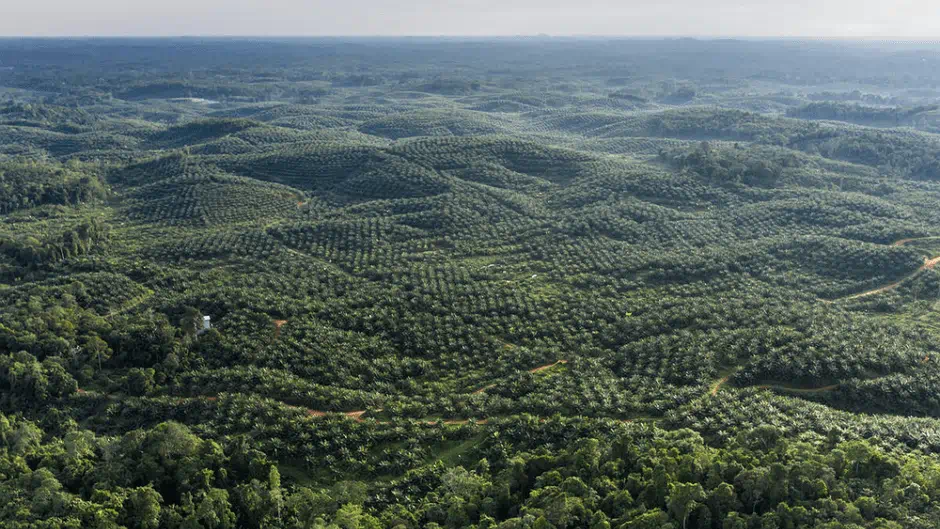
  • Together with WWF and our supplier Evonik we are promoting sustainable development through a joint landscape project in the Malaysian region of Tabin, in Sabah on the island of Borneo. The aim of the program is to foster sustainable palm oil production and to end deforestation. To achieve this, by 2026 mid-sized palm oil farmers and a total area of 15,000 hectares will be certified according to the internationally recognized RSPO standard.

    Additionally, we are working with Evonik and WWF to protect wildlife habitats in Tabin as this region is home to many endangered species. The aim is to stabilize the populations of endangered species such as the rare Borneo elephant and the orangutan over the next years.

Further commitment

Beiersdorf is closely involved in both the RSPO and the Forum for Sustainable Palm Oil(FONAP) in order to promote an end-to-end sustainable palm (kernel) oil economy. The RSPO Principles define a responsible minimum industry standard, while FONAP is strongly committed to environmental and local community concerns through advanced certification criteria.